Italian

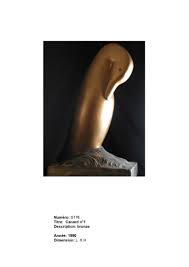
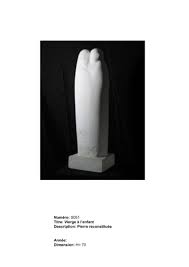
Giordano and Michela Russo, curators of the exhibition catalog, first of all emphasize that this artist experiments equally in painting and sculpture to achieve the same representational goals.


As Michelangelo Buonarotti writes in a letter to Benedetto Varchi, a Florentine intellectual of the 16th century, he initially thought that sculpture was the lantern of painting, that the relationship between the two was like that of the sun and the moon. However, he then concludes that both derive from the same type of intelligence. Therefore, every painter should equally engage in both painting and sculpture, and likewise every sculptor in both sculpture and painting.


The sculpture, Michelangelo continues in the letter, “is what is done by force removing”: for example, taking material away from a block of stone. Painting, on the other hand, is what is done “by way of putting” (material, pigments, lines, and shapes on canvas to bring out a figure).
It is precisely in these two simple and fundamental operations that one can recognize the work of Francesco Cremonese in the course of the exhibition, where both painting and sculptural works interact.
Here is why the exhibition and the catalog are organized according to stylistic criteria rather than merely chronological ones.
In particular, the catalog is divided into two parts: the first focuses on the strictly sculptural path and identifies three main lines of reflection; the second on the pictorial one, which highlights the stylistic, coloristic, and thematic peculiarities of the works on display.
Finally, the exhibition and the catalog take their name from one of the paintings on display, with a distinctly autobiographical flavor: The Painter’s Dream Who Paints in the Night.
The painting dates back to the 1990s and depicts a figure from behind, suspended like those of the Franco-Russian painter Marc Chagall, who with brushes in hand, seems focused on shaping the world.
The painted surface is crossed by a diagonal that geometrically divides the working plane into two parts. In the upper part, we see a wide chromatic application of midnight blue that echoes a starry sky, dotted with bright points like diamonds. In the lower part, almost mirroring, a dark green hue shapes the earth seen from above. It is a meadow scattered with flowers that reflect the starry sky like so many iridescent points. And there is a painter: the human figure so suspended between sky and earth. Also in green, reflecting the tone of the night, the figure is captured in the act of painting, one by one, the luminous points, like fireflies heralding the arrival of the beautiful season and a new cycle of life.
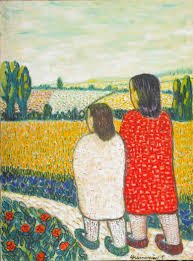
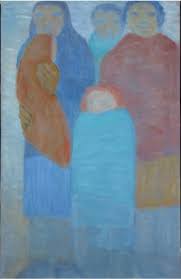
The painting expresses a sense of deep calm and serenity and serves as a metaphor, suggesting a universal message of rebuilding the world, thus representing the dream not of a single individual or a single country, but of all humanity. It is this intense spirituality that can be felt when visiting the exhibition, carefully observing the works, which carry a strong sense of sacredness, noticeable in the delicacy with which the artist expresses himself, especially in sculpture, and represents the subjects he has chosen. In painting, on the other hand, there are various inspirations that Cremonese’s works evoke: Picasso, naive painters, Modigliani, Gauguin, but particularly moving are those works that draw inspiration from the mines, from those who worked inside them and from those who waited outside after the mining disasters.
It is precisely that humanism, which Michela Russo highlights in her essay, that seems to permeate the work of this artist, with his artistic journey that opens up after the two wars, starting from the 1950s, and which seems to identify the need to start again from the human, from one’s feelings, from the body and from daily events, but at the same time to transcend it in its claims of centrality in the world. Another question that the artist poses is what art is and what defines a work of art. And the story of the Venere di Brizet seems to touch upon these two issues: that of the concept of art and the complementary one regarding the author or what an author is.
The issue of humanism, the status of art, and the concept of authorship, which the biographical and artistic events of Francesco Cremonese lead us to reflect upon, share the same ethical substratum: the necessity of rediscovering an intimate and privileged relationship with the world and the cosmos that, as humans, we inhabit. It also urges us to have a relationship of attention and care towards this very universe.
This is why the exhibition of works by Francesco Cremonese is not just an exhibition space, but above all can become a moment of reflection on the themes dear to this artist, while also offering us a universal perspective on those existential themes that every human being contemplates.
His son Emmanuel wanted to emphasize how his father’s story, born in 1907, spanned the 20th century, two wars, the exodus, misery, and immigration, but he always preserved a love for art. With his family, on the exodus train that carried all the inhabitants of Spresiano, fleeing from the war zone of the Piave, he arrived in a magnificent Mediterranean landscape in Sicily, near the ruins of the Greek temples.
His grandfather spoke to him about ancient Greece, the Italian Renaissance, Phidias, and Michelangelo: this will be his artistic awakening. When he returns, Spresiano is destroyed. At 11, he begins working in Lovadina and attends evening and drawing classes. But the misery is great, and the family decides to emigrate to France in 1925, to Saint-Etienne, an industrial and mining city where the black dust of coal covers everything.
At 26, after his studies, which we have already mentioned, and the memories of his grandfather’s teachings, he imagines and carves a statue of Venus in Carrara marble, in the manner of the ancient Greeks. Thanks to a particular stratagem, his Venus becomes the Venus de Brizet, recognized first by experts as authentic and even declared a historical monument by the French government in May 1938. Hundreds of articles, books, and radio and television broadcasts will tell his story.
In 1951 he married Romana Barbon and had 3 children. Despite the exhausting work to support the family, he tirelessly continues his quest for beauty. Every day from morning to evening, he draws, paints, and sculpts without ever stopping, creating a body of work (150 sculptures and 430 paintings) that is very original, characterized by the search for simplicity and purity: there should be no shadows and everything must be light.
He died in November 2002 at the age of 95, but the day before he was still drawing.
Giordano and Michela Russo, curators of the exhibition catalog, first of all emphasize that this artist experiments equally in painting and sculpture to achieve the same representational goals.
As Michelangelo Buonarotti writes in a letter to Benedetto Varchi, a Florentine intellectual of the 16th century, he initially thought that sculpture was the lantern of painting, that the relationship between the two was like that of the sun and the moon. However, he then concludes that both derive from the same type of intelligence. Therefore, every painter should equally engage in both painting and sculpture, and likewise every sculptor in both sculpture and painting.
The sculpture, Michelangelo continues in the letter, “is what is done by force removing”: for example, taking material away from a block of stone. Painting, on the other hand, is what is done “by way of putting” (material, pigments, lines, and shapes on canvas to bring out a figure).
It is precisely in these two simple and fundamental operations that one can recognize the work of Francesco Cremonese in the course of the exhibition, where both painting and sculptural works interact.
Here is why the exhibition and the catalog are organized according to stylistic criteria rather than merely chronological ones.
In particular, the catalog is divided into two parts: the first focuses on the strictly sculptural path and identifies three main lines of reflection; the second on the pictorial one, which highlights the stylistic, coloristic, and thematic peculiarities of the works on display.
Finally, the exhibition and the catalog take their name from one of the paintings on display, with a distinctly autobiographical flavor: The Painter’s Dream Who Paints in the Night.
The painting dates back to the 1990s and depicts a figure from behind, suspended like those of the Franco-Russian painter Marc Chagall, who with brushes in hand, seems focused on shaping the world.
The painted surface is crossed by a diagonal that geometrically divides the working plane into two parts. In the upper part, we see a wide chromatic application of midnight blue that echoes a starry sky, dotted with bright points like diamonds. In the lower part, almost mirroring, a dark green hue shapes the earth seen from above. It is a meadow scattered with flowers that reflect the starry sky like so many iridescent points. And there is a painter: the human figure so suspended between sky and earth. Also in green, reflecting the tone of the night, the figure is captured in the act of painting, one by one, the luminous points, like fireflies heralding the arrival of the beautiful season and a new cycle of life.
The painting expresses a sense of deep calm and serenity and serves as a metaphor, suggesting a universal message of rebuilding the world, thus representing the dream not of a single individual or a single country, but of all humanity. It is this intense spirituality that can be felt when visiting the exhibition, carefully observing the works, which carry a strong sense of sacredness, noticeable in the delicacy with which the artist expresses himself, especially in sculpture, and represents the subjects he has chosen. In painting, on the other hand, there are various inspirations that Cremonese’s works evoke: Picasso, naive painters, Modigliani, Gauguin, but particularly moving are those works that draw inspiration from the mines, from those who worked inside them and from those who waited outside after the mining disasters.
It is precisely that humanism, which Michela Russo highlights in her essay, that seems to permeate the work of this artist, with his artistic journey that opens up after the two wars, starting from the 1950s, and which seems to identify the need to start again from the human, from one’s feelings, from the body and from daily events, but at the same time to transcend it in its claims of centrality in the world. Another question that the artist poses is what art is and what defines a work of art. And the story of the Venere di Brizet seems to touch upon these two issues: that of the concept of art and the complementary one regarding the author or what an author is.
The issue of humanism, the status of art, and the concept of authorship, which the biographical and artistic events of Francesco Cremonese lead us to reflect upon, share the same ethical substratum: the necessity of rediscovering an intimate and privileged relationship with the world and the cosmos that, as humans, we inhabit. It also urges us to have a relationship of attention and care towards this very universe.
This is why the exhibition of works by Francesco Cremonese is not just an exhibition space, but above all can become a moment of reflection on the themes dear to this artist, while also offering us a universal perspective on those existential themes that every human being contemplates.
The painter who paints in the night
There are artists who seek approval and others who seek the absolute.
Francesco Cremonese belongs to this second category.
In fact, his career was not built on noise, but on silence; not on his visibility, but on his depth. Not on fashion, but on fidelity to a high and rigorous idea of beauty.
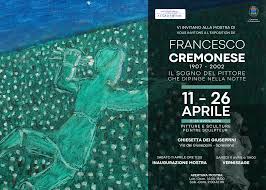
And this is why the municipal administration of Spresiano, represented by Mayor Marco Della Pietra, in collaboration with the Accademia 88 Association, which has accompanied and encouraged the artist’s family to share his artistic and human heritage with the community, has decided to exhibit some of his paintings and sculptures at the Church of the Giuseppini, which has now become an exhibition space since 2025.
Already in the autumn of 2020, a presentation was held in Treviso for the members of the Alliance Française featuring the artist Francesco Cremonese, born in Spresiano but active in France.
He came to Spresiano for vacation every year because he loved his hometown as much as he loved the Piave, where he collected stones from the riverbed that he sculpted.
The mayor of Saint Etienne also wanted to participate in the introductory greetings of the exhibition catalog, because, as he recalled, Francesco Cremonese arrived in their city in 1925 at the age of 17 and attended evening classes at the School of Fine Arts, where he won numerous awards, so much so that he was called in 1931 by Alfred Rochette, the sculptor of the war memorial, to honor the 6000 soldiers of the city who died for France. He collaborated with him on this important project, which, when completed, was inaugurated by the then President of the Republic, Albert Lebrun.
His son Emmanuel wanted to emphasize how his father’s story, born in 1907, spanned the 20th century, two wars, the exodus, misery, and immigration, but he always preserved a love for art. With his family, on the exodus train that carried all the inhabitants of Spresiano, fleeing from the war zone of the Piave, he arrived in a magnificent Mediterranean landscape in Sicily, near the ruins of the Greek temples.
His grandfather spoke to him about ancient Greece, the Italian Renaissance, Phidias, and Michelangelo: this will be his artistic awakening. When he returns, Spresiano is destroyed. At 11, he begins working in Lovadina and attends evening and drawing classes. But the misery is great, and the family decides to emigrate to France in 1925, to Saint-Etienne, an industrial and mining city where the black dust of coal covers everything.
At 26, after his studies, which we have already mentioned, and the memories of his grandfather’s teachings, he imagines and carves a statue of Venus in Carrara marble, in the manner of the ancient Greeks. Thanks to a particular stratagem, his Venus becomes the Venus de Brizet, recognized first by experts as authentic and even declared a historical monument by the French government in May 1938. Hundreds of articles, books, and radio and television broadcasts will tell his story.
In 1951 he married Romana Barbon and had 3 children. Despite the exhausting work to support the family, he tirelessly continues his quest for beauty. Every day from morning to evening, he draws, paints, and sculpts without ever stopping, creating a body of work (150 sculptures and 430 paintings) that is very original, characterized by the search for simplicity and purity: there should be no shadows and everything must be light.
He died in November 2002 at the age of 95, but the day before he was still drawing.
Giordano and Michela Russo, curators of the exhibition catalog, first of all emphasize that this artist experiments equally in painting and sculpture to achieve the same representational goals.
As Michelangelo Buonarotti writes in a letter to Benedetto Varchi, a Florentine intellectual of the 16th century, he initially thought that sculpture was the lantern of painting, that the relationship between the two was like that of the sun and the moon. However, he then concludes that both derive from the same type of intelligence. Therefore, every painter should equally engage in both painting and sculpture, and likewise every sculptor in both sculpture and painting.
The sculpture, Michelangelo continues in the letter, “is what is done by force removing”: for example, taking material away from a block of stone. Painting, on the other hand, is what is done “by way of putting” (material, pigments, lines, and shapes on canvas to bring out a figure).
It is precisely in these two simple and fundamental operations that one can recognize the work of Francesco Cremonese in the course of the exhibition, where both painting and sculptural works interact.
Here is why the exhibition and the catalog are organized according to stylistic criteria rather than merely chronological ones.
In particular, the catalog is divided into two parts: the first focuses on the strictly sculptural path and identifies three main lines of reflection; the second on the pictorial one, which highlights the stylistic, coloristic, and thematic peculiarities of the works on display.
Finally, the exhibition and the catalog take their name from one of the paintings on display, with a distinctly autobiographical flavor: The Painter’s Dream Who Paints in the Night.
The painting dates back to the 1990s and depicts a figure from behind, suspended like those of the Franco-Russian painter Marc Chagall, who with brushes in hand, seems focused on shaping the world.
The painted surface is crossed by a diagonal that geometrically divides the working plane into two parts. In the upper part, we see a wide chromatic application of midnight blue that echoes a starry sky, dotted with bright points like diamonds. In the lower part, almost mirroring, a dark green hue shapes the earth seen from above. It is a meadow scattered with flowers that reflect the starry sky like so many iridescent points. And there is a painter: the human figure so suspended between sky and earth. Also in green, reflecting the tone of the night, the figure is captured in the act of painting, one by one, the luminous points, like fireflies heralding the arrival of the beautiful season and a new cycle of life.
The painting expresses a sense of deep calm and serenity and serves as a metaphor, suggesting a universal message of rebuilding the world, thus representing the dream not of a single individual or a single country, but of all humanity. It is this intense spirituality that can be felt when visiting the exhibition, carefully observing the works, which carry a strong sense of sacredness, noticeable in the delicacy with which the artist expresses himself, especially in sculpture, and represents the subjects he has chosen. In painting, on the other hand, there are various inspirations that Cremonese’s works evoke: Picasso, naive painters, Modigliani, Gauguin, but particularly moving are those works that draw inspiration from the mines, from those who worked inside them and from those who waited outside after the mining disasters.
It is precisely that humanism, which Michela Russo highlights in her essay, that seems to permeate the work of this artist, with his artistic journey that opens up after the two wars, starting from the 1950s, and which seems to identify the need to start again from the human, from one’s feelings, from the body and from daily events, but at the same time to transcend it in its claims of centrality in the world. Another question that the artist poses is what art is and what defines a work of art. And the story of the Venere di Brizet seems to touch upon these two issues: that of the concept of art and the complementary one regarding the author or what an author is.
The issue of humanism, the status of art, and the concept of authorship, which the biographical and artistic events of Francesco Cremonese lead us to reflect upon, share the same ethical substratum: the necessity of rediscovering an intimate and privileged relationship with the world and the cosmos that, as humans, we inhabit. It also urges us to have a relationship of attention and care towards this very universe.
This is why the exhibition of works by Francesco Cremonese is not just an exhibition space, but above all can become a moment of reflection on the themes dear to this artist, while also offering us a universal perspective on those existential themes that every human being contemplates.