
 Italian

Access to the Pozzo del Merro, due to its exceptional scientific value, the high fragility of the aquatic ecosystem it hosts, and especially for reasons of public safety, is currently prohibited.


Conclusive Considerations
The sinkhole of Pozzo del Merro, which can be considered a “window” into the karst aquifer of the Cornicolana hydrostructure, represents a geological and environmental feature of global significance. It is indeed the second deepest flooded sinkhole in the world, in whose waters at least one new animal species for science (Niphargus cornicolanus) is present, endemic to our country. There are probably still many riches that this fascinating and interesting cavity hides and that need to be revealed. It is therefore absolutely necessary to adopt all possible precautions to avoid any form of damage to the structure and pollution of its waters. A notable case is that of the aquatic fern Salvinia molesta, an invasive exotic species of Brazilian origin found in its waters by the author in 2003, fortunately removed permanently by the managing authority of the protected area.


Events like these must be absolutely avoided. The increasing urbanization of the area surrounding the Well is also truly concerning, where construction continues without serious consideration of the hydrogeological impacts in the area, and the growing anthropogenic disturbance (excessive foot traffic around the Well, noise pollution from motorized vehicles, and so on) risks irreparably damaging ecosystems of immense scientific value that are still so poorly understood today. The “enhancement” projects are also worrying, which, in the name of a use whose purposes are solely economic, risk causing irrecoverable damage, as already happened in the 1970s with the attempt to exploit the Well’s waters for commercial purposes. In this area, anthropogenic impact should instead be minimized as much as possible, through the activation of greater and more effective controls by the competent authorities and prudent management not only of the Well and the protected area but of the territory as a whole.
There are three natural elements that can be taken as symbols of the Cornicolana area: from a geological point of view, the Pozzo del Merro, the second deepest karst cavity in the world; from a zoological point of view, Niphargus cornicolanus, an exclusive Italian endemic species of the waters of the Pozzo; from a botanical point of view, Styrax officinalis, a rare and protected species in Lazio, taken as a symbol of the region by the Italian Botanical Society.
Will these evidently exceptional values be sufficient to keep the Pozzo del Merro intact within a protected area in our devastated country, where naturalistic culture is practically nonexistent?
Photo credits: CaLuMa / Marco Giardini / Giorgio Caramanna


[1] By: Marco Giardini and Giorgio Caramanna in: “Sant’Angelo Romano, (Monti Cornicolani, Rome), edited by Marco Giardini, 2012”. The Well of Merro: history of research and current situation, p. 270
[2] Federico Zeri in “La Stampa”, 1985. Quoted by Marco Giardini and Giorgio Caramanna (The Merro Well: history of research and current situation), in: “Sant’Angelo Romano, (Monti Cornicolani, Rome)”, edited by Marco Giardini (2012), p. 267.
[3] Marco Giardini, a graduate in Natural Sciences, holds a PhD in Biology and teaches Natural Sciences and Chemistry at the Higher Education Institute Via Roma 298 Guidonia. He collaborates with the Department of Environmental Biology at the University of Rome Sapienza, where he conducts research activities. He is a member of numerous scientific societies, cultural associations, and environmental organizations. He is the author of about 250 publications including books, brochures, edited works, conference proceedings, and articles in national and international scientific journals. He is involved, at the local level, in the study, enhancement, and protection of the natural environment of the Monti Cornicolani and the northeastern area of Rome, as well as the dialect and popular traditions of his birthplace.

The Pit is also frequented by numerous birds, often difficult to observe, that find shelter and food in the dense vegetation of the chasm. A recent study, published in 2017 by a group of researchers (including the author) coordinated by Corrado Battisti, has recorded 28 species of birds within the chasm, whose frequency decreases as one descends into the chasm, the bottom of which is frequented by only two species: the blackbird (Turdus merula) and the wren (Troglodytes troglodytes). Among the species of greater conservation interest, one cannot fail to mention the peregrine falcon (Falco peregrinus), whose presence in the Pit can be severely threatened even by disturbances caused by drones or repeated loud noises. There is little data on mammals, including this fox (Vulpes vulpes) and porcupine (Hystrix cristata).
Of particular scientific interest is the discovery of populations of different species of small aquatic crustaceans. One of these, captured by the author, Giorgio Caramanna, and Alessandro Campanaro, was found to be new to science and described in 2005 by Augusto Vigna Taglianti and Valentina Iannilli, under the name Niphargus cornicolanus, an endemic species of this exceptional, unique cavity.
Access to the Pozzo del Merro, due to its exceptional scientific value, the high fragility of the aquatic ecosystem it hosts, and especially for reasons of public safety, is currently prohibited.
Conclusive Considerations
The sinkhole of Pozzo del Merro, which can be considered a “window” into the karst aquifer of the Cornicolana hydrostructure, represents a geological and environmental feature of global significance. It is indeed the second deepest flooded sinkhole in the world, in whose waters at least one new animal species for science (Niphargus cornicolanus) is present, endemic to our country. There are probably still many riches that this fascinating and interesting cavity hides and that need to be revealed. It is therefore absolutely necessary to adopt all possible precautions to avoid any form of damage to the structure and pollution of its waters. A notable case is that of the aquatic fern Salvinia molesta, an invasive exotic species of Brazilian origin found in its waters by the author in 2003, fortunately removed permanently by the managing authority of the protected area.
Events like these must be absolutely avoided. The increasing urbanization of the area surrounding the Well is also truly concerning, where construction continues without serious consideration of the hydrogeological impacts in the area, and the growing anthropogenic disturbance (excessive foot traffic around the Well, noise pollution from motorized vehicles, and so on) risks irreparably damaging ecosystems of immense scientific value that are still so poorly understood today. The “enhancement” projects are also worrying, which, in the name of a use whose purposes are solely economic, risk causing irrecoverable damage, as already happened in the 1970s with the attempt to exploit the Well’s waters for commercial purposes. In this area, anthropogenic impact should instead be minimized as much as possible, through the activation of greater and more effective controls by the competent authorities and prudent management not only of the Well and the protected area but of the territory as a whole.
There are three natural elements that can be taken as symbols of the Cornicolana area: from a geological point of view, the Pozzo del Merro, the second deepest karst cavity in the world; from a zoological point of view, Niphargus cornicolanus, an exclusive Italian endemic species of the waters of the Pozzo; from a botanical point of view, Styrax officinalis, a rare and protected species in Lazio, taken as a symbol of the region by the Italian Botanical Society.
Will these evidently exceptional values be sufficient to keep the Pozzo del Merro intact within a protected area in our devastated country, where naturalistic culture is practically nonexistent?
Photo credits: CaLuMa / Marco Giardini / Giorgio Caramanna
[1] By: Marco Giardini and Giorgio Caramanna in: “Sant’Angelo Romano, (Monti Cornicolani, Rome), edited by Marco Giardini, 2012”. The Well of Merro: history of research and current situation, p. 270
[2] Federico Zeri in “La Stampa”, 1985. Quoted by Marco Giardini and Giorgio Caramanna (The Merro Well: history of research and current situation), in: “Sant’Angelo Romano, (Monti Cornicolani, Rome)”, edited by Marco Giardini (2012), p. 267.
[3] Marco Giardini, a graduate in Natural Sciences, holds a PhD in Biology and teaches Natural Sciences and Chemistry at the Higher Education Institute Via Roma 298 Guidonia. He collaborates with the Department of Environmental Biology at the University of Rome Sapienza, where he conducts research activities. He is a member of numerous scientific societies, cultural associations, and environmental organizations. He is the author of about 250 publications including books, brochures, edited works, conference proceedings, and articles in national and international scientific journals. He is involved, at the local level, in the study, enhancement, and protection of the natural environment of the Monti Cornicolani and the northeastern area of Rome, as well as the dialect and popular traditions of his birthplace.

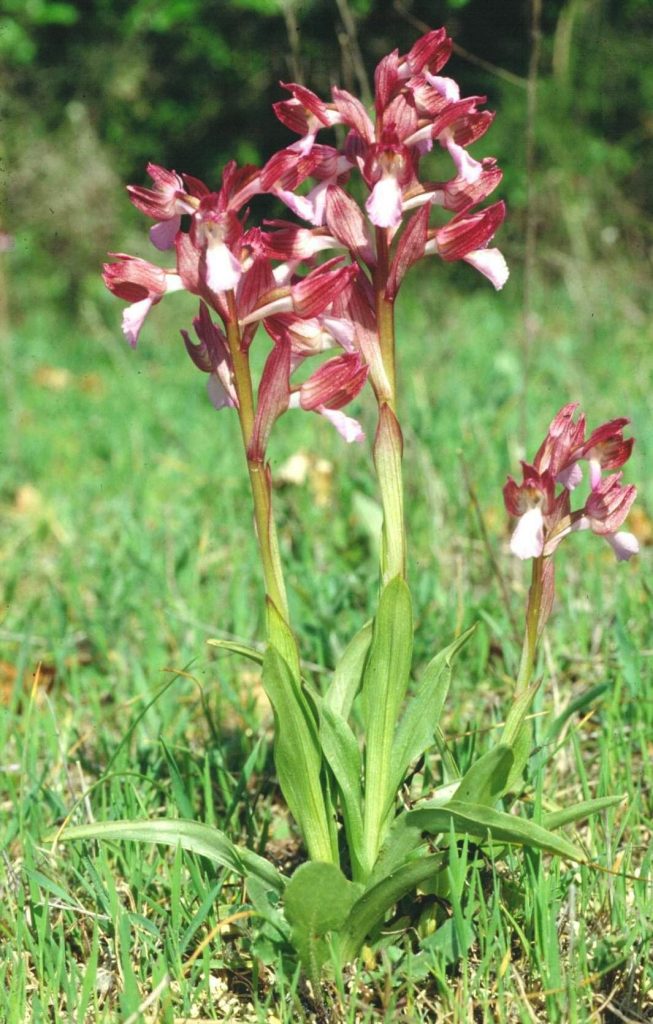
Due to its scientific interest and its very limited distribution area in Italy, it is a protected species in Lazio (L. R. n° 61/1974), has been adopted as a symbol of the nearby Regional Natural Park of the Lucretili Mountains, and chosen as the emblematic species of Lazio by the Italian Botanical Society. Near the chasm, various species of wild orchids can also be observed, which are protected, like all Orchidaceae of the Italian flora, under regulation 338/97/CEE. The walls of the cavity are densely covered with lush vegetation mainly composed of evergreen elements, among which the holm oak (Quercus ilex), which is the clearly dominant species, and the bay laurel (Laurus nobilis). In the underbrush, other protected species are abundant, such as the butcher’s broom (Ruscus aculeatus) and cyclamens (Cyclamen hederifolium and C. repandum). The vegetation inside the cavity, extremely lush, sometimes resembles, especially when wet from rain, the forests of some subtropical regions. This sensation is also enhanced by the numerous species of ferns present (as many as seven). In the lowest part of the cavity, near the water mirror, there are lush specimens of fig (Ficus carica) and elderberry (Sambucus nigra), as well as mesophilic species that testify, even at the Pozzo del Merro, to the phenomenon of thermal inversion typical of large karst cavities.
The zoological value of the cavity is truly remarkable. It is frequented by numerous species of amphibians and reptiles (almost all protected in Lazio by L.R. 18/88), making it of considerable interest from a herpetological perspective. The waters of the cavity permanently host populations of two species of newts, the spotted newt (Triturus vulgaris meridionalis) and the Italian crested newt (Triturus carnifex). Within the sinkhole, it is also possible to occasionally observe various species of the genus Rana, including the Apennine frog (Rana italica), an important Italian endemic, as well as the aforementioned Italian crested newt. Due to its high herpetological interest, the area has been proposed (by the author and Pierangelo Crucitti) as an ARER (Area of Regional Herpetological Relevance) and, as such, recognized in 2021 by the Societas Herpetologica Italica.
The Pit is also frequented by numerous birds, often difficult to observe, that find shelter and food in the dense vegetation of the chasm. A recent study, published in 2017 by a group of researchers (including the author) coordinated by Corrado Battisti, has recorded 28 species of birds within the chasm, whose frequency decreases as one descends into the chasm, the bottom of which is frequented by only two species: the blackbird (Turdus merula) and the wren (Troglodytes troglodytes). Among the species of greater conservation interest, one cannot fail to mention the peregrine falcon (Falco peregrinus), whose presence in the Pit can be severely threatened even by disturbances caused by drones or repeated loud noises. There is little data on mammals, including this fox (Vulpes vulpes) and porcupine (Hystrix cristata).
Of particular scientific interest is the discovery of populations of different species of small aquatic crustaceans. One of these, captured by the author, Giorgio Caramanna, and Alessandro Campanaro, was found to be new to science and described in 2005 by Augusto Vigna Taglianti and Valentina Iannilli, under the name Niphargus cornicolanus, an endemic species of this exceptional, unique cavity.
Access to the Pozzo del Merro, due to its exceptional scientific value, the high fragility of the aquatic ecosystem it hosts, and especially for reasons of public safety, is currently prohibited.
Conclusive Considerations
The sinkhole of Pozzo del Merro, which can be considered a “window” into the karst aquifer of the Cornicolana hydrostructure, represents a geological and environmental feature of global significance. It is indeed the second deepest flooded sinkhole in the world, in whose waters at least one new animal species for science (Niphargus cornicolanus) is present, endemic to our country. There are probably still many riches that this fascinating and interesting cavity hides and that need to be revealed. It is therefore absolutely necessary to adopt all possible precautions to avoid any form of damage to the structure and pollution of its waters. A notable case is that of the aquatic fern Salvinia molesta, an invasive exotic species of Brazilian origin found in its waters by the author in 2003, fortunately removed permanently by the managing authority of the protected area.
Events like these must be absolutely avoided. The increasing urbanization of the area surrounding the Well is also truly concerning, where construction continues without serious consideration of the hydrogeological impacts in the area, and the growing anthropogenic disturbance (excessive foot traffic around the Well, noise pollution from motorized vehicles, and so on) risks irreparably damaging ecosystems of immense scientific value that are still so poorly understood today. The “enhancement” projects are also worrying, which, in the name of a use whose purposes are solely economic, risk causing irrecoverable damage, as already happened in the 1970s with the attempt to exploit the Well’s waters for commercial purposes. In this area, anthropogenic impact should instead be minimized as much as possible, through the activation of greater and more effective controls by the competent authorities and prudent management not only of the Well and the protected area but of the territory as a whole.
There are three natural elements that can be taken as symbols of the Cornicolana area: from a geological point of view, the Pozzo del Merro, the second deepest karst cavity in the world; from a zoological point of view, Niphargus cornicolanus, an exclusive Italian endemic species of the waters of the Pozzo; from a botanical point of view, Styrax officinalis, a rare and protected species in Lazio, taken as a symbol of the region by the Italian Botanical Society.
Will these evidently exceptional values be sufficient to keep the Pozzo del Merro intact within a protected area in our devastated country, where naturalistic culture is practically nonexistent?
Photo credits: CaLuMa / Marco Giardini / Giorgio Caramanna
[1] By: Marco Giardini and Giorgio Caramanna in: “Sant’Angelo Romano, (Monti Cornicolani, Rome), edited by Marco Giardini, 2012”. The Well of Merro: history of research and current situation, p. 270
[2] Federico Zeri in “La Stampa”, 1985. Quoted by Marco Giardini and Giorgio Caramanna (The Merro Well: history of research and current situation), in: “Sant’Angelo Romano, (Monti Cornicolani, Rome)”, edited by Marco Giardini (2012), p. 267.
[3] Marco Giardini, a graduate in Natural Sciences, holds a PhD in Biology and teaches Natural Sciences and Chemistry at the Higher Education Institute Via Roma 298 Guidonia. He collaborates with the Department of Environmental Biology at the University of Rome Sapienza, where he conducts research activities. He is a member of numerous scientific societies, cultural associations, and environmental organizations. He is the author of about 250 publications including books, brochures, edited works, conference proceedings, and articles in national and international scientific journals. He is involved, at the local level, in the study, enhancement, and protection of the natural environment of the Monti Cornicolani and the northeastern area of Rome, as well as the dialect and popular traditions of his birthplace.
This impressive cavity is located in the Cornicolana region, which is still rich from a naturalistic point of view. Various forest areas can still be observed here, almost all of which are now protected within the already mentioned “Macchia di Gattaceca and Macchia del Barco Nature Reserve” and the ZSC (Special Conservation Area) “Macchia di Sant’Angelo Romano,” established under Directive 92/43/EEC (known as the Habitat Directive) and as such part of the European network of protected areas Natura 2000. The natural vegetation observable near the imposing chasm of the Pozzo del Merro consists of a thermophilic scrub mainly formed by oaks (Quercus pubescens), terebinth (Pistacia terebinthus), and silktree (Cercis siliquastrum); Mediterranean evergreen elements can also be observed, such as the viburnum-tin (Viburnum tinus) and the phillyrea (Phillyrea latifolia). Abundant is the storax (Styrax officinalis, “ammella” in Sant’Angelo Romano), a shrub of oriental origin with white and fragrant flowers, the only Italian representative of the tropical family Styracaceae, found in Italy only in Lazio (mainly in the tiburtino-lucretile-cornicolana area) and in two locations in Campania.
Due to its scientific interest and its very limited distribution area in Italy, it is a protected species in Lazio (L. R. n° 61/1974), has been adopted as a symbol of the nearby Regional Natural Park of the Lucretili Mountains, and chosen as the emblematic species of Lazio by the Italian Botanical Society. Near the chasm, various species of wild orchids can also be observed, which are protected, like all Orchidaceae of the Italian flora, under regulation 338/97/CEE. The walls of the cavity are densely covered with lush vegetation mainly composed of evergreen elements, among which the holm oak (Quercus ilex), which is the clearly dominant species, and the bay laurel (Laurus nobilis). In the underbrush, other protected species are abundant, such as the butcher’s broom (Ruscus aculeatus) and cyclamens (Cyclamen hederifolium and C. repandum). The vegetation inside the cavity, extremely lush, sometimes resembles, especially when wet from rain, the forests of some subtropical regions. This sensation is also enhanced by the numerous species of ferns present (as many as seven). In the lowest part of the cavity, near the water mirror, there are lush specimens of fig (Ficus carica) and elderberry (Sambucus nigra), as well as mesophilic species that testify, even at the Pozzo del Merro, to the phenomenon of thermal inversion typical of large karst cavities.
The zoological value of the cavity is truly remarkable. It is frequented by numerous species of amphibians and reptiles (almost all protected in Lazio by L.R. 18/88), making it of considerable interest from a herpetological perspective. The waters of the cavity permanently host populations of two species of newts, the spotted newt (Triturus vulgaris meridionalis) and the Italian crested newt (Triturus carnifex). Within the sinkhole, it is also possible to occasionally observe various species of the genus Rana, including the Apennine frog (Rana italica), an important Italian endemic, as well as the aforementioned Italian crested newt. Due to its high herpetological interest, the area has been proposed (by the author and Pierangelo Crucitti) as an ARER (Area of Regional Herpetological Relevance) and, as such, recognized in 2021 by the Societas Herpetologica Italica.
The Pit is also frequented by numerous birds, often difficult to observe, that find shelter and food in the dense vegetation of the chasm. A recent study, published in 2017 by a group of researchers (including the author) coordinated by Corrado Battisti, has recorded 28 species of birds within the chasm, whose frequency decreases as one descends into the chasm, the bottom of which is frequented by only two species: the blackbird (Turdus merula) and the wren (Troglodytes troglodytes). Among the species of greater conservation interest, one cannot fail to mention the peregrine falcon (Falco peregrinus), whose presence in the Pit can be severely threatened even by disturbances caused by drones or repeated loud noises. There is little data on mammals, including this fox (Vulpes vulpes) and porcupine (Hystrix cristata).
Of particular scientific interest is the discovery of populations of different species of small aquatic crustaceans. One of these, captured by the author, Giorgio Caramanna, and Alessandro Campanaro, was found to be new to science and described in 2005 by Augusto Vigna Taglianti and Valentina Iannilli, under the name Niphargus cornicolanus, an endemic species of this exceptional, unique cavity.
Access to the Pozzo del Merro, due to its exceptional scientific value, the high fragility of the aquatic ecosystem it hosts, and especially for reasons of public safety, is currently prohibited.
Conclusive Considerations
The sinkhole of Pozzo del Merro, which can be considered a “window” into the karst aquifer of the Cornicolana hydrostructure, represents a geological and environmental feature of global significance. It is indeed the second deepest flooded sinkhole in the world, in whose waters at least one new animal species for science (Niphargus cornicolanus) is present, endemic to our country. There are probably still many riches that this fascinating and interesting cavity hides and that need to be revealed. It is therefore absolutely necessary to adopt all possible precautions to avoid any form of damage to the structure and pollution of its waters. A notable case is that of the aquatic fern Salvinia molesta, an invasive exotic species of Brazilian origin found in its waters by the author in 2003, fortunately removed permanently by the managing authority of the protected area.
Events like these must be absolutely avoided. The increasing urbanization of the area surrounding the Well is also truly concerning, where construction continues without serious consideration of the hydrogeological impacts in the area, and the growing anthropogenic disturbance (excessive foot traffic around the Well, noise pollution from motorized vehicles, and so on) risks irreparably damaging ecosystems of immense scientific value that are still so poorly understood today. The “enhancement” projects are also worrying, which, in the name of a use whose purposes are solely economic, risk causing irrecoverable damage, as already happened in the 1970s with the attempt to exploit the Well’s waters for commercial purposes. In this area, anthropogenic impact should instead be minimized as much as possible, through the activation of greater and more effective controls by the competent authorities and prudent management not only of the Well and the protected area but of the territory as a whole.
There are three natural elements that can be taken as symbols of the Cornicolana area: from a geological point of view, the Pozzo del Merro, the second deepest karst cavity in the world; from a zoological point of view, Niphargus cornicolanus, an exclusive Italian endemic species of the waters of the Pozzo; from a botanical point of view, Styrax officinalis, a rare and protected species in Lazio, taken as a symbol of the region by the Italian Botanical Society.
Will these evidently exceptional values be sufficient to keep the Pozzo del Merro intact within a protected area in our devastated country, where naturalistic culture is practically nonexistent?
Photo credits: CaLuMa / Marco Giardini / Giorgio Caramanna
[1] By: Marco Giardini and Giorgio Caramanna in: “Sant’Angelo Romano, (Monti Cornicolani, Rome), edited by Marco Giardini, 2012”. The Well of Merro: history of research and current situation, p. 270
[2] Federico Zeri in “La Stampa”, 1985. Quoted by Marco Giardini and Giorgio Caramanna (The Merro Well: history of research and current situation), in: “Sant’Angelo Romano, (Monti Cornicolani, Rome)”, edited by Marco Giardini (2012), p. 267.
[3] Marco Giardini, a graduate in Natural Sciences, holds a PhD in Biology and teaches Natural Sciences and Chemistry at the Higher Education Institute Via Roma 298 Guidonia. He collaborates with the Department of Environmental Biology at the University of Rome Sapienza, where he conducts research activities. He is a member of numerous scientific societies, cultural associations, and environmental organizations. He is the author of about 250 publications including books, brochures, edited works, conference proceedings, and articles in national and international scientific journals. He is involved, at the local level, in the study, enhancement, and protection of the natural environment of the Monti Cornicolani and the northeastern area of Rome, as well as the dialect and popular traditions of his birthplace.

No less evocative are the impressions of Federico Zeri that Giardini reports “…The Pozzo del Merro is a place whose charm is truly difficult to define. It is indeed one of those places where air, earth, and water touch in absolute silence; and when the light falls vertically in the blazing noon of the Lazio summer, the place instills a religious reverence, almost of an occult presence. One can read and travel beautifully, visit ancient sanctuaries or look at statues, reliefs, frescoes, and painted vases; on the essence of Paganism and its worship of the forces of Nature, I have learned much more from the “Pozzo di Merro” than from Ovid’s Metamorphoses, the writings of Emperor Julian, or Sir James George Fraser.”[2]
But I believe that at this point it is time to give the floor to him. Happy reading!
THE EXCEPTIONAL KARST SINKHOLE OF THE POZZO DEL MERRO – MONTI CORNICOLANI, ROME – BY MARCO GIARDINI
Introduction
In the Cornicolani Mountains, modest Mesozoic carbonate elevations located in the region between the Tiber and the Aniene about 30 km northeast of Rome, in the municipality of Sant’Angelo Romano, the karst sinkhole of Pozzo del Merro opens up. This impressive sinkhole (a technical term indicating a depression formed by the sinking of the ground) is included in the “Macchia di Gattaceca and Macchia del Barco Nature Reserve,” a regional protected area managed by the Metropolitan City of Rome. Known to locals for ages, it appears, as early as 1890, in the description of a tourist itinerary that leads from Rome to S. Angelo, where it is mentioned as “a kind of chasm, at the bottom of which lies a small lake and whose extremely steep sides are covered with trees.” Measurements of the cavity and a detailed description of its emerged part were published in 1948 by Aldo Giacomo Segre, along with those of other main karst forms in the Cornicolani area, such as the nearby Pozzo Sventatore, Grotta della Selva, the doline of Carceri, and the doline of S. Francesco, as well as the more distant dolines called “I Fossi,” on the southern edge of the Bosco di Grotte Cerqueta, which are also included in the aforementioned Nature Reserve. The Pozzo del Merro is one of the most majestic evidences of the action of karst erosion in the Cornicolani Mountains, but the formation of these sinkholes is not a novelty in the area northeast of Rome. The most recent event occurred in January 2001 near Marcellina, where, suddenly and without any warning signs, a funnel-shaped sinkhole opened up with a sub-circular perimeter of about 40 m in diameter and a depth of over 10 m. In Sant’Angelo Romano, the meaning of the word Merro has been lost, but Segre still reminds us of it in a work on the toponymy of karst phenomena published in 1956. The word mèrro or mèro, used in some parts of Lazio and Abruzzo, actually means chasm, deep doline.
Naturalistic Aspects
The funnel-shaped sinkhole of the Pozzo del Merro opens onto the countryside (elevation 150 m a.s.l.) with a sub-circular mouth of about 150 m in diameter; the structure deepens for about 80 meters down to the surface of a tiny but very deep lake (elevation 70 m a.s.l.). It was known that the lake of Pozzo del Merro was very deep, but investigations carried out in the past by Segre in the 1940s and by Paolo Bono in the 1970s to determine the depth of the well had always provided results ranging between 70 and 80 m. More recent explorations of the submerged part of the cavity were initially conducted by Giorgio Caramanna (a student of Prof. Bono) and Riccardo Malatesta, who carried out a series of scientific speleological dives in 1999 down to a depth of 100 meters. Their dives were followed by explorations conducted in collaboration with the Diving Units of the Fire Brigades of Rome, Grosseto, Viterbo, and Milan, which provided special remotely operated underwater vehicles. The last dive of the ROV (Remote Operated Vehicle), equipped with color cameras and a manipulative claw, continued in 2002 in the exploration of the flooded cavity down to the exceptional depth of 392 meters (operational limit of the machine), without however locating the bottom. In light of these explorations, the Pozzo del Merro was found to be the deepest flooded karst cavity in the world, later surpassed in 2016 by a karst cavity in the Czech Republic.
This impressive cavity is located in the Cornicolana region, which is still rich from a naturalistic point of view. Various forest areas can still be observed here, almost all of which are now protected within the already mentioned “Macchia di Gattaceca and Macchia del Barco Nature Reserve” and the ZSC (Special Conservation Area) “Macchia di Sant’Angelo Romano,” established under Directive 92/43/EEC (known as the Habitat Directive) and as such part of the European network of protected areas Natura 2000. The natural vegetation observable near the imposing chasm of the Pozzo del Merro consists of a thermophilic scrub mainly formed by oaks (Quercus pubescens), terebinth (Pistacia terebinthus), and silktree (Cercis siliquastrum); Mediterranean evergreen elements can also be observed, such as the viburnum-tin (Viburnum tinus) and the phillyrea (Phillyrea latifolia). Abundant is the storax (Styrax officinalis, “ammella” in Sant’Angelo Romano), a shrub of oriental origin with white and fragrant flowers, the only Italian representative of the tropical family Styracaceae, found in Italy only in Lazio (mainly in the tiburtino-lucretile-cornicolana area) and in two locations in Campania.
Due to its scientific interest and its very limited distribution area in Italy, it is a protected species in Lazio (L. R. n° 61/1974), has been adopted as a symbol of the nearby Regional Natural Park of the Lucretili Mountains, and chosen as the emblematic species of Lazio by the Italian Botanical Society. Near the chasm, various species of wild orchids can also be observed, which are protected, like all Orchidaceae of the Italian flora, under regulation 338/97/CEE. The walls of the cavity are densely covered with lush vegetation mainly composed of evergreen elements, among which the holm oak (Quercus ilex), which is the clearly dominant species, and the bay laurel (Laurus nobilis). In the underbrush, other protected species are abundant, such as the butcher’s broom (Ruscus aculeatus) and cyclamens (Cyclamen hederifolium and C. repandum). The vegetation inside the cavity, extremely lush, sometimes resembles, especially when wet from rain, the forests of some subtropical regions. This sensation is also enhanced by the numerous species of ferns present (as many as seven). In the lowest part of the cavity, near the water mirror, there are lush specimens of fig (Ficus carica) and elderberry (Sambucus nigra), as well as mesophilic species that testify, even at the Pozzo del Merro, to the phenomenon of thermal inversion typical of large karst cavities.
The zoological value of the cavity is truly remarkable. It is frequented by numerous species of amphibians and reptiles (almost all protected in Lazio by L.R. 18/88), making it of considerable interest from a herpetological perspective. The waters of the cavity permanently host populations of two species of newts, the spotted newt (Triturus vulgaris meridionalis) and the Italian crested newt (Triturus carnifex). Within the sinkhole, it is also possible to occasionally observe various species of the genus Rana, including the Apennine frog (Rana italica), an important Italian endemic, as well as the aforementioned Italian crested newt. Due to its high herpetological interest, the area has been proposed (by the author and Pierangelo Crucitti) as an ARER (Area of Regional Herpetological Relevance) and, as such, recognized in 2021 by the Societas Herpetologica Italica.
The Pit is also frequented by numerous birds, often difficult to observe, that find shelter and food in the dense vegetation of the chasm. A recent study, published in 2017 by a group of researchers (including the author) coordinated by Corrado Battisti, has recorded 28 species of birds within the chasm, whose frequency decreases as one descends into the chasm, the bottom of which is frequented by only two species: the blackbird (Turdus merula) and the wren (Troglodytes troglodytes). Among the species of greater conservation interest, one cannot fail to mention the peregrine falcon (Falco peregrinus), whose presence in the Pit can be severely threatened even by disturbances caused by drones or repeated loud noises. There is little data on mammals, including this fox (Vulpes vulpes) and porcupine (Hystrix cristata).
Of particular scientific interest is the discovery of populations of different species of small aquatic crustaceans. One of these, captured by the author, Giorgio Caramanna, and Alessandro Campanaro, was found to be new to science and described in 2005 by Augusto Vigna Taglianti and Valentina Iannilli, under the name Niphargus cornicolanus, an endemic species of this exceptional, unique cavity.
Access to the Pozzo del Merro, due to its exceptional scientific value, the high fragility of the aquatic ecosystem it hosts, and especially for reasons of public safety, is currently prohibited.
Conclusive Considerations
The sinkhole of Pozzo del Merro, which can be considered a “window” into the karst aquifer of the Cornicolana hydrostructure, represents a geological and environmental feature of global significance. It is indeed the second deepest flooded sinkhole in the world, in whose waters at least one new animal species for science (Niphargus cornicolanus) is present, endemic to our country. There are probably still many riches that this fascinating and interesting cavity hides and that need to be revealed. It is therefore absolutely necessary to adopt all possible precautions to avoid any form of damage to the structure and pollution of its waters. A notable case is that of the aquatic fern Salvinia molesta, an invasive exotic species of Brazilian origin found in its waters by the author in 2003, fortunately removed permanently by the managing authority of the protected area.
Events like these must be absolutely avoided. The increasing urbanization of the area surrounding the Well is also truly concerning, where construction continues without serious consideration of the hydrogeological impacts in the area, and the growing anthropogenic disturbance (excessive foot traffic around the Well, noise pollution from motorized vehicles, and so on) risks irreparably damaging ecosystems of immense scientific value that are still so poorly understood today. The “enhancement” projects are also worrying, which, in the name of a use whose purposes are solely economic, risk causing irrecoverable damage, as already happened in the 1970s with the attempt to exploit the Well’s waters for commercial purposes. In this area, anthropogenic impact should instead be minimized as much as possible, through the activation of greater and more effective controls by the competent authorities and prudent management not only of the Well and the protected area but of the territory as a whole.
There are three natural elements that can be taken as symbols of the Cornicolana area: from a geological point of view, the Pozzo del Merro, the second deepest karst cavity in the world; from a zoological point of view, Niphargus cornicolanus, an exclusive Italian endemic species of the waters of the Pozzo; from a botanical point of view, Styrax officinalis, a rare and protected species in Lazio, taken as a symbol of the region by the Italian Botanical Society.
Will these evidently exceptional values be sufficient to keep the Pozzo del Merro intact within a protected area in our devastated country, where naturalistic culture is practically nonexistent?
Photo credits: CaLuMa / Marco Giardini / Giorgio Caramanna
[1] By: Marco Giardini and Giorgio Caramanna in: “Sant’Angelo Romano, (Monti Cornicolani, Rome), edited by Marco Giardini, 2012”. The Well of Merro: history of research and current situation, p. 270
[2] Federico Zeri in “La Stampa”, 1985. Quoted by Marco Giardini and Giorgio Caramanna (The Merro Well: history of research and current situation), in: “Sant’Angelo Romano, (Monti Cornicolani, Rome)”, edited by Marco Giardini (2012), p. 267.
[3] Marco Giardini, a graduate in Natural Sciences, holds a PhD in Biology and teaches Natural Sciences and Chemistry at the Higher Education Institute Via Roma 298 Guidonia. He collaborates with the Department of Environmental Biology at the University of Rome Sapienza, where he conducts research activities. He is a member of numerous scientific societies, cultural associations, and environmental organizations. He is the author of about 250 publications including books, brochures, edited works, conference proceedings, and articles in national and international scientific journals. He is involved, at the local level, in the study, enhancement, and protection of the natural environment of the Monti Cornicolani and the northeastern area of Rome, as well as the dialect and popular traditions of his birthplace.

We return to the large square just as the wind seems to have calmed down. We lean over the viewpoint and Marco points to something in the distance. “… See that patch of vegetation down there? It’s among those trees that the famous Pozzo del Merro is located…”. It seems impossible to me, after so many searches and so much time, to have had the fortune of meeting Marco Giardini, an expert not only on the Well but also on the extraordinary flora and fauna that surround it. A few months ago, I had read his book on Sant’Angelo and the Monti Cornicolani, and some of the considerations and reflections he shared only increased my already great interest. “… The Pozzo del Merro” writes Giardini, “is a natural monument of exceptional scientific and naturalistic value that has aroused, over time, for various reasons, the curiosity and interest of numerous scholars. Precisely because of its exceptional nature, which contrasts with a particular environmental fragility, the Well should be strictly protected and managed in the most careful way possible, in order to avoid any alteration of a unique ecosystem in the world that is still little explored and known…”[1]
No less evocative are the impressions of Federico Zeri that Giardini reports “…The Pozzo del Merro is a place whose charm is truly difficult to define. It is indeed one of those places where air, earth, and water touch in absolute silence; and when the light falls vertically in the blazing noon of the Lazio summer, the place instills a religious reverence, almost of an occult presence. One can read and travel beautifully, visit ancient sanctuaries or look at statues, reliefs, frescoes, and painted vases; on the essence of Paganism and its worship of the forces of Nature, I have learned much more from the “Pozzo di Merro” than from Ovid’s Metamorphoses, the writings of Emperor Julian, or Sir James George Fraser.”[2]
But I believe that at this point it is time to give the floor to him. Happy reading!
THE EXCEPTIONAL KARST SINKHOLE OF THE POZZO DEL MERRO – MONTI CORNICOLANI, ROME – BY MARCO GIARDINI
Introduction
In the Cornicolani Mountains, modest Mesozoic carbonate elevations located in the region between the Tiber and the Aniene about 30 km northeast of Rome, in the municipality of Sant’Angelo Romano, the karst sinkhole of Pozzo del Merro opens up. This impressive sinkhole (a technical term indicating a depression formed by the sinking of the ground) is included in the “Macchia di Gattaceca and Macchia del Barco Nature Reserve,” a regional protected area managed by the Metropolitan City of Rome. Known to locals for ages, it appears, as early as 1890, in the description of a tourist itinerary that leads from Rome to S. Angelo, where it is mentioned as “a kind of chasm, at the bottom of which lies a small lake and whose extremely steep sides are covered with trees.” Measurements of the cavity and a detailed description of its emerged part were published in 1948 by Aldo Giacomo Segre, along with those of other main karst forms in the Cornicolani area, such as the nearby Pozzo Sventatore, Grotta della Selva, the doline of Carceri, and the doline of S. Francesco, as well as the more distant dolines called “I Fossi,” on the southern edge of the Bosco di Grotte Cerqueta, which are also included in the aforementioned Nature Reserve. The Pozzo del Merro is one of the most majestic evidences of the action of karst erosion in the Cornicolani Mountains, but the formation of these sinkholes is not a novelty in the area northeast of Rome. The most recent event occurred in January 2001 near Marcellina, where, suddenly and without any warning signs, a funnel-shaped sinkhole opened up with a sub-circular perimeter of about 40 m in diameter and a depth of over 10 m. In Sant’Angelo Romano, the meaning of the word Merro has been lost, but Segre still reminds us of it in a work on the toponymy of karst phenomena published in 1956. The word mèrro or mèro, used in some parts of Lazio and Abruzzo, actually means chasm, deep doline.
Naturalistic Aspects
The funnel-shaped sinkhole of the Pozzo del Merro opens onto the countryside (elevation 150 m a.s.l.) with a sub-circular mouth of about 150 m in diameter; the structure deepens for about 80 meters down to the surface of a tiny but very deep lake (elevation 70 m a.s.l.). It was known that the lake of Pozzo del Merro was very deep, but investigations carried out in the past by Segre in the 1940s and by Paolo Bono in the 1970s to determine the depth of the well had always provided results ranging between 70 and 80 m. More recent explorations of the submerged part of the cavity were initially conducted by Giorgio Caramanna (a student of Prof. Bono) and Riccardo Malatesta, who carried out a series of scientific speleological dives in 1999 down to a depth of 100 meters. Their dives were followed by explorations conducted in collaboration with the Diving Units of the Fire Brigades of Rome, Grosseto, Viterbo, and Milan, which provided special remotely operated underwater vehicles. The last dive of the ROV (Remote Operated Vehicle), equipped with color cameras and a manipulative claw, continued in 2002 in the exploration of the flooded cavity down to the exceptional depth of 392 meters (operational limit of the machine), without however locating the bottom. In light of these explorations, the Pozzo del Merro was found to be the deepest flooded karst cavity in the world, later surpassed in 2016 by a karst cavity in the Czech Republic.
This impressive cavity is located in the Cornicolana region, which is still rich from a naturalistic point of view. Various forest areas can still be observed here, almost all of which are now protected within the already mentioned “Macchia di Gattaceca and Macchia del Barco Nature Reserve” and the ZSC (Special Conservation Area) “Macchia di Sant’Angelo Romano,” established under Directive 92/43/EEC (known as the Habitat Directive) and as such part of the European network of protected areas Natura 2000. The natural vegetation observable near the imposing chasm of the Pozzo del Merro consists of a thermophilic scrub mainly formed by oaks (Quercus pubescens), terebinth (Pistacia terebinthus), and silktree (Cercis siliquastrum); Mediterranean evergreen elements can also be observed, such as the viburnum-tin (Viburnum tinus) and the phillyrea (Phillyrea latifolia). Abundant is the storax (Styrax officinalis, “ammella” in Sant’Angelo Romano), a shrub of oriental origin with white and fragrant flowers, the only Italian representative of the tropical family Styracaceae, found in Italy only in Lazio (mainly in the tiburtino-lucretile-cornicolana area) and in two locations in Campania.
Due to its scientific interest and its very limited distribution area in Italy, it is a protected species in Lazio (L. R. n° 61/1974), has been adopted as a symbol of the nearby Regional Natural Park of the Lucretili Mountains, and chosen as the emblematic species of Lazio by the Italian Botanical Society. Near the chasm, various species of wild orchids can also be observed, which are protected, like all Orchidaceae of the Italian flora, under regulation 338/97/CEE. The walls of the cavity are densely covered with lush vegetation mainly composed of evergreen elements, among which the holm oak (Quercus ilex), which is the clearly dominant species, and the bay laurel (Laurus nobilis). In the underbrush, other protected species are abundant, such as the butcher’s broom (Ruscus aculeatus) and cyclamens (Cyclamen hederifolium and C. repandum). The vegetation inside the cavity, extremely lush, sometimes resembles, especially when wet from rain, the forests of some subtropical regions. This sensation is also enhanced by the numerous species of ferns present (as many as seven). In the lowest part of the cavity, near the water mirror, there are lush specimens of fig (Ficus carica) and elderberry (Sambucus nigra), as well as mesophilic species that testify, even at the Pozzo del Merro, to the phenomenon of thermal inversion typical of large karst cavities.
The zoological value of the cavity is truly remarkable. It is frequented by numerous species of amphibians and reptiles (almost all protected in Lazio by L.R. 18/88), making it of considerable interest from a herpetological perspective. The waters of the cavity permanently host populations of two species of newts, the spotted newt (Triturus vulgaris meridionalis) and the Italian crested newt (Triturus carnifex). Within the sinkhole, it is also possible to occasionally observe various species of the genus Rana, including the Apennine frog (Rana italica), an important Italian endemic, as well as the aforementioned Italian crested newt. Due to its high herpetological interest, the area has been proposed (by the author and Pierangelo Crucitti) as an ARER (Area of Regional Herpetological Relevance) and, as such, recognized in 2021 by the Societas Herpetologica Italica.
The Pit is also frequented by numerous birds, often difficult to observe, that find shelter and food in the dense vegetation of the chasm. A recent study, published in 2017 by a group of researchers (including the author) coordinated by Corrado Battisti, has recorded 28 species of birds within the chasm, whose frequency decreases as one descends into the chasm, the bottom of which is frequented by only two species: the blackbird (Turdus merula) and the wren (Troglodytes troglodytes). Among the species of greater conservation interest, one cannot fail to mention the peregrine falcon (Falco peregrinus), whose presence in the Pit can be severely threatened even by disturbances caused by drones or repeated loud noises. There is little data on mammals, including this fox (Vulpes vulpes) and porcupine (Hystrix cristata).
Of particular scientific interest is the discovery of populations of different species of small aquatic crustaceans. One of these, captured by the author, Giorgio Caramanna, and Alessandro Campanaro, was found to be new to science and described in 2005 by Augusto Vigna Taglianti and Valentina Iannilli, under the name Niphargus cornicolanus, an endemic species of this exceptional, unique cavity.
Access to the Pozzo del Merro, due to its exceptional scientific value, the high fragility of the aquatic ecosystem it hosts, and especially for reasons of public safety, is currently prohibited.
Conclusive Considerations
The sinkhole of Pozzo del Merro, which can be considered a “window” into the karst aquifer of the Cornicolana hydrostructure, represents a geological and environmental feature of global significance. It is indeed the second deepest flooded sinkhole in the world, in whose waters at least one new animal species for science (Niphargus cornicolanus) is present, endemic to our country. There are probably still many riches that this fascinating and interesting cavity hides and that need to be revealed. It is therefore absolutely necessary to adopt all possible precautions to avoid any form of damage to the structure and pollution of its waters. A notable case is that of the aquatic fern Salvinia molesta, an invasive exotic species of Brazilian origin found in its waters by the author in 2003, fortunately removed permanently by the managing authority of the protected area.
Events like these must be absolutely avoided. The increasing urbanization of the area surrounding the Well is also truly concerning, where construction continues without serious consideration of the hydrogeological impacts in the area, and the growing anthropogenic disturbance (excessive foot traffic around the Well, noise pollution from motorized vehicles, and so on) risks irreparably damaging ecosystems of immense scientific value that are still so poorly understood today. The “enhancement” projects are also worrying, which, in the name of a use whose purposes are solely economic, risk causing irrecoverable damage, as already happened in the 1970s with the attempt to exploit the Well’s waters for commercial purposes. In this area, anthropogenic impact should instead be minimized as much as possible, through the activation of greater and more effective controls by the competent authorities and prudent management not only of the Well and the protected area but of the territory as a whole.
There are three natural elements that can be taken as symbols of the Cornicolana area: from a geological point of view, the Pozzo del Merro, the second deepest karst cavity in the world; from a zoological point of view, Niphargus cornicolanus, an exclusive Italian endemic species of the waters of the Pozzo; from a botanical point of view, Styrax officinalis, a rare and protected species in Lazio, taken as a symbol of the region by the Italian Botanical Society.
Will these evidently exceptional values be sufficient to keep the Pozzo del Merro intact within a protected area in our devastated country, where naturalistic culture is practically nonexistent?
Photo credits: CaLuMa / Marco Giardini / Giorgio Caramanna
[1] By: Marco Giardini and Giorgio Caramanna in: “Sant’Angelo Romano, (Monti Cornicolani, Rome), edited by Marco Giardini, 2012”. The Well of Merro: history of research and current situation, p. 270
[2] Federico Zeri in “La Stampa”, 1985. Quoted by Marco Giardini and Giorgio Caramanna (The Merro Well: history of research and current situation), in: “Sant’Angelo Romano, (Monti Cornicolani, Rome)”, edited by Marco Giardini (2012), p. 267.
[3] Marco Giardini, a graduate in Natural Sciences, holds a PhD in Biology and teaches Natural Sciences and Chemistry at the Higher Education Institute Via Roma 298 Guidonia. He collaborates with the Department of Environmental Biology at the University of Rome Sapienza, where he conducts research activities. He is a member of numerous scientific societies, cultural associations, and environmental organizations. He is the author of about 250 publications including books, brochures, edited works, conference proceedings, and articles in national and international scientific journals. He is involved, at the local level, in the study, enhancement, and protection of the natural environment of the Monti Cornicolani and the northeastern area of Rome, as well as the dialect and popular traditions of his birthplace.
The appointment with Marco Giardini is in the main square of the charming village of Sant’Angelo Romano, which offers a spectacular view of the Roman countryside that on clear days stretches all the way to the sea. I am here because a few kilometers away there is something that has intrigued me for a long time… the “Pozzo del Merro,” the sinkhole that, with its 462 meters of depth, of which 392 are covered by water, is the second deepest karst sinkhole in the world, and Marco Giardini is one of the leading experts on this well.
But who is Marco Giardini? Graduated in Natural Sciences from the University of Rome “La Sapienza,” he obtained a Master’s degree in Botany and a PhD in Biology. An expert paleopalynologist, author of over 250 scientific or popular-scientific publications, he is a highly regarded professional, but above all, a man who deeply loves his land and everything that surrounds it.
SANT’ANGELO ROMANO – It’s windy and cold, and a stop for a hot coffee is a must. We pause just long enough for the usual greetings in the small bar in the square. Before discussing the Pozzo del Merro, we visit this village of great cultural interest. Sant’Angelo Romano, a village dating back to the second half of the 12th century, is situated on the summit of Monte Patulo, one of the Monti Cornicolani, about thirty kilometers from Rome.
Walking through the many small streets of the center, one can observe the beautiful ancient walls, the church of Santa Maria and San Biagio that dominates the entire town from above, and the Orsini-Cesi castle, which unfortunately is closed for renovations. It’s a shame not to be able to see the prehistoric museum and the valuable frescoes housed inside the castle, commissioned by Federico II Cesi, Prince of Sant’Angelo and founder, in 1603, of the Accademia dei Lincei. It truly feels like being in the Middle Ages. A tangle of streets and alleys where time seems to have stood still.
Climbing a small stone staircase, Marco points out a red step, streaked with white, where a beautiful ammonite, a fossil mollusk dating back to the Jurassic, is embedded and clearly visible. “There were several in the historic center,” Marco tells me, “but unfortunately they have been lost due to numerous modernizations.” As he tells me about the village, his love for this land is palpable… for nature, traditions, history; you can sense his determined will to try to preserve, maintain, and restore the testimonies of the past. He also had the idea to place along the route of the historic center, in collaboration with the Municipality, valuable terracotta plaques that display, in dialect (with translation in Italian), some of the proverbs from local tradition.
We return to the large square just as the wind seems to have calmed down. We lean over the viewpoint and Marco points to something in the distance. “… See that patch of vegetation down there? It’s among those trees that the famous Pozzo del Merro is located…”. It seems impossible to me, after so many searches and so much time, to have had the fortune of meeting Marco Giardini, an expert not only on the Well but also on the extraordinary flora and fauna that surround it. A few months ago, I had read his book on Sant’Angelo and the Monti Cornicolani, and some of the considerations and reflections he shared only increased my already great interest. “… The Pozzo del Merro” writes Giardini, “is a natural monument of exceptional scientific and naturalistic value that has aroused, over time, for various reasons, the curiosity and interest of numerous scholars. Precisely because of its exceptional nature, which contrasts with a particular environmental fragility, the Well should be strictly protected and managed in the most careful way possible, in order to avoid any alteration of a unique ecosystem in the world that is still little explored and known…”[1]
No less evocative are the impressions of Federico Zeri that Giardini reports “…The Pozzo del Merro is a place whose charm is truly difficult to define. It is indeed one of those places where air, earth, and water touch in absolute silence; and when the light falls vertically in the blazing noon of the Lazio summer, the place instills a religious reverence, almost of an occult presence. One can read and travel beautifully, visit ancient sanctuaries or look at statues, reliefs, frescoes, and painted vases; on the essence of Paganism and its worship of the forces of Nature, I have learned much more from the “Pozzo di Merro” than from Ovid’s Metamorphoses, the writings of Emperor Julian, or Sir James George Fraser.”[2]
But I believe that at this point it is time to give the floor to him. Happy reading!
THE EXCEPTIONAL KARST SINKHOLE OF THE POZZO DEL MERRO – MONTI CORNICOLANI, ROME – BY MARCO GIARDINI
Introduction
In the Cornicolani Mountains, modest Mesozoic carbonate elevations located in the region between the Tiber and the Aniene about 30 km northeast of Rome, in the municipality of Sant’Angelo Romano, the karst sinkhole of Pozzo del Merro opens up. This impressive sinkhole (a technical term indicating a depression formed by the sinking of the ground) is included in the “Macchia di Gattaceca and Macchia del Barco Nature Reserve,” a regional protected area managed by the Metropolitan City of Rome. Known to locals for ages, it appears, as early as 1890, in the description of a tourist itinerary that leads from Rome to S. Angelo, where it is mentioned as “a kind of chasm, at the bottom of which lies a small lake and whose extremely steep sides are covered with trees.” Measurements of the cavity and a detailed description of its emerged part were published in 1948 by Aldo Giacomo Segre, along with those of other main karst forms in the Cornicolani area, such as the nearby Pozzo Sventatore, Grotta della Selva, the doline of Carceri, and the doline of S. Francesco, as well as the more distant dolines called “I Fossi,” on the southern edge of the Bosco di Grotte Cerqueta, which are also included in the aforementioned Nature Reserve. The Pozzo del Merro is one of the most majestic evidences of the action of karst erosion in the Cornicolani Mountains, but the formation of these sinkholes is not a novelty in the area northeast of Rome. The most recent event occurred in January 2001 near Marcellina, where, suddenly and without any warning signs, a funnel-shaped sinkhole opened up with a sub-circular perimeter of about 40 m in diameter and a depth of over 10 m. In Sant’Angelo Romano, the meaning of the word Merro has been lost, but Segre still reminds us of it in a work on the toponymy of karst phenomena published in 1956. The word mèrro or mèro, used in some parts of Lazio and Abruzzo, actually means chasm, deep doline.
Naturalistic Aspects
The funnel-shaped sinkhole of the Pozzo del Merro opens onto the countryside (elevation 150 m a.s.l.) with a sub-circular mouth of about 150 m in diameter; the structure deepens for about 80 meters down to the surface of a tiny but very deep lake (elevation 70 m a.s.l.). It was known that the lake of Pozzo del Merro was very deep, but investigations carried out in the past by Segre in the 1940s and by Paolo Bono in the 1970s to determine the depth of the well had always provided results ranging between 70 and 80 m. More recent explorations of the submerged part of the cavity were initially conducted by Giorgio Caramanna (a student of Prof. Bono) and Riccardo Malatesta, who carried out a series of scientific speleological dives in 1999 down to a depth of 100 meters. Their dives were followed by explorations conducted in collaboration with the Diving Units of the Fire Brigades of Rome, Grosseto, Viterbo, and Milan, which provided special remotely operated underwater vehicles. The last dive of the ROV (Remote Operated Vehicle), equipped with color cameras and a manipulative claw, continued in 2002 in the exploration of the flooded cavity down to the exceptional depth of 392 meters (operational limit of the machine), without however locating the bottom. In light of these explorations, the Pozzo del Merro was found to be the deepest flooded karst cavity in the world, later surpassed in 2016 by a karst cavity in the Czech Republic.
This impressive cavity is located in the Cornicolana region, which is still rich from a naturalistic point of view. Various forest areas can still be observed here, almost all of which are now protected within the already mentioned “Macchia di Gattaceca and Macchia del Barco Nature Reserve” and the ZSC (Special Conservation Area) “Macchia di Sant’Angelo Romano,” established under Directive 92/43/EEC (known as the Habitat Directive) and as such part of the European network of protected areas Natura 2000. The natural vegetation observable near the imposing chasm of the Pozzo del Merro consists of a thermophilic scrub mainly formed by oaks (Quercus pubescens), terebinth (Pistacia terebinthus), and silktree (Cercis siliquastrum); Mediterranean evergreen elements can also be observed, such as the viburnum-tin (Viburnum tinus) and the phillyrea (Phillyrea latifolia). Abundant is the storax (Styrax officinalis, “ammella” in Sant’Angelo Romano), a shrub of oriental origin with white and fragrant flowers, the only Italian representative of the tropical family Styracaceae, found in Italy only in Lazio (mainly in the tiburtino-lucretile-cornicolana area) and in two locations in Campania.
Due to its scientific interest and its very limited distribution area in Italy, it is a protected species in Lazio (L. R. n° 61/1974), has been adopted as a symbol of the nearby Regional Natural Park of the Lucretili Mountains, and chosen as the emblematic species of Lazio by the Italian Botanical Society. Near the chasm, various species of wild orchids can also be observed, which are protected, like all Orchidaceae of the Italian flora, under regulation 338/97/CEE. The walls of the cavity are densely covered with lush vegetation mainly composed of evergreen elements, among which the holm oak (Quercus ilex), which is the clearly dominant species, and the bay laurel (Laurus nobilis). In the underbrush, other protected species are abundant, such as the butcher’s broom (Ruscus aculeatus) and cyclamens (Cyclamen hederifolium and C. repandum). The vegetation inside the cavity, extremely lush, sometimes resembles, especially when wet from rain, the forests of some subtropical regions. This sensation is also enhanced by the numerous species of ferns present (as many as seven). In the lowest part of the cavity, near the water mirror, there are lush specimens of fig (Ficus carica) and elderberry (Sambucus nigra), as well as mesophilic species that testify, even at the Pozzo del Merro, to the phenomenon of thermal inversion typical of large karst cavities.
The zoological value of the cavity is truly remarkable. It is frequented by numerous species of amphibians and reptiles (almost all protected in Lazio by L.R. 18/88), making it of considerable interest from a herpetological perspective. The waters of the cavity permanently host populations of two species of newts, the spotted newt (Triturus vulgaris meridionalis) and the Italian crested newt (Triturus carnifex). Within the sinkhole, it is also possible to occasionally observe various species of the genus Rana, including the Apennine frog (Rana italica), an important Italian endemic, as well as the aforementioned Italian crested newt. Due to its high herpetological interest, the area has been proposed (by the author and Pierangelo Crucitti) as an ARER (Area of Regional Herpetological Relevance) and, as such, recognized in 2021 by the Societas Herpetologica Italica.
The Pit is also frequented by numerous birds, often difficult to observe, that find shelter and food in the dense vegetation of the chasm. A recent study, published in 2017 by a group of researchers (including the author) coordinated by Corrado Battisti, has recorded 28 species of birds within the chasm, whose frequency decreases as one descends into the chasm, the bottom of which is frequented by only two species: the blackbird (Turdus merula) and the wren (Troglodytes troglodytes). Among the species of greater conservation interest, one cannot fail to mention the peregrine falcon (Falco peregrinus), whose presence in the Pit can be severely threatened even by disturbances caused by drones or repeated loud noises. There is little data on mammals, including this fox (Vulpes vulpes) and porcupine (Hystrix cristata).
Of particular scientific interest is the discovery of populations of different species of small aquatic crustaceans. One of these, captured by the author, Giorgio Caramanna, and Alessandro Campanaro, was found to be new to science and described in 2005 by Augusto Vigna Taglianti and Valentina Iannilli, under the name Niphargus cornicolanus, an endemic species of this exceptional, unique cavity.
Access to the Pozzo del Merro, due to its exceptional scientific value, the high fragility of the aquatic ecosystem it hosts, and especially for reasons of public safety, is currently prohibited.
Conclusive Considerations
The sinkhole of Pozzo del Merro, which can be considered a “window” into the karst aquifer of the Cornicolana hydrostructure, represents a geological and environmental feature of global significance. It is indeed the second deepest flooded sinkhole in the world, in whose waters at least one new animal species for science (Niphargus cornicolanus) is present, endemic to our country. There are probably still many riches that this fascinating and interesting cavity hides and that need to be revealed. It is therefore absolutely necessary to adopt all possible precautions to avoid any form of damage to the structure and pollution of its waters. A notable case is that of the aquatic fern Salvinia molesta, an invasive exotic species of Brazilian origin found in its waters by the author in 2003, fortunately removed permanently by the managing authority of the protected area.
Events like these must be absolutely avoided. The increasing urbanization of the area surrounding the Well is also truly concerning, where construction continues without serious consideration of the hydrogeological impacts in the area, and the growing anthropogenic disturbance (excessive foot traffic around the Well, noise pollution from motorized vehicles, and so on) risks irreparably damaging ecosystems of immense scientific value that are still so poorly understood today. The “enhancement” projects are also worrying, which, in the name of a use whose purposes are solely economic, risk causing irrecoverable damage, as already happened in the 1970s with the attempt to exploit the Well’s waters for commercial purposes. In this area, anthropogenic impact should instead be minimized as much as possible, through the activation of greater and more effective controls by the competent authorities and prudent management not only of the Well and the protected area but of the territory as a whole.
There are three natural elements that can be taken as symbols of the Cornicolana area: from a geological point of view, the Pozzo del Merro, the second deepest karst cavity in the world; from a zoological point of view, Niphargus cornicolanus, an exclusive Italian endemic species of the waters of the Pozzo; from a botanical point of view, Styrax officinalis, a rare and protected species in Lazio, taken as a symbol of the region by the Italian Botanical Society.
Will these evidently exceptional values be sufficient to keep the Pozzo del Merro intact within a protected area in our devastated country, where naturalistic culture is practically nonexistent?
Photo credits: CaLuMa / Marco Giardini / Giorgio Caramanna
[1] By: Marco Giardini and Giorgio Caramanna in: “Sant’Angelo Romano, (Monti Cornicolani, Rome), edited by Marco Giardini, 2012”. The Well of Merro: history of research and current situation, p. 270
[2] Federico Zeri in “La Stampa”, 1985. Quoted by Marco Giardini and Giorgio Caramanna (The Merro Well: history of research and current situation), in: “Sant’Angelo Romano, (Monti Cornicolani, Rome)”, edited by Marco Giardini (2012), p. 267.
[3] Marco Giardini, a graduate in Natural Sciences, holds a PhD in Biology and teaches Natural Sciences and Chemistry at the Higher Education Institute Via Roma 298 Guidonia. He collaborates with the Department of Environmental Biology at the University of Rome Sapienza, where he conducts research activities. He is a member of numerous scientific societies, cultural associations, and environmental organizations. He is the author of about 250 publications including books, brochures, edited works, conference proceedings, and articles in national and international scientific journals. He is involved, at the local level, in the study, enhancement, and protection of the natural environment of the Monti Cornicolani and the northeastern area of Rome, as well as the dialect and popular traditions of his birthplace.
- Team

Online newspaper registered under no. 10/2005 in the press register of the Court of Treviso on 02/04/2005
Director: direttore@ilnuovoterraglio.it
Email: editorial@ilnuovoterraglio.com
For collaborations: info@nereida.it